









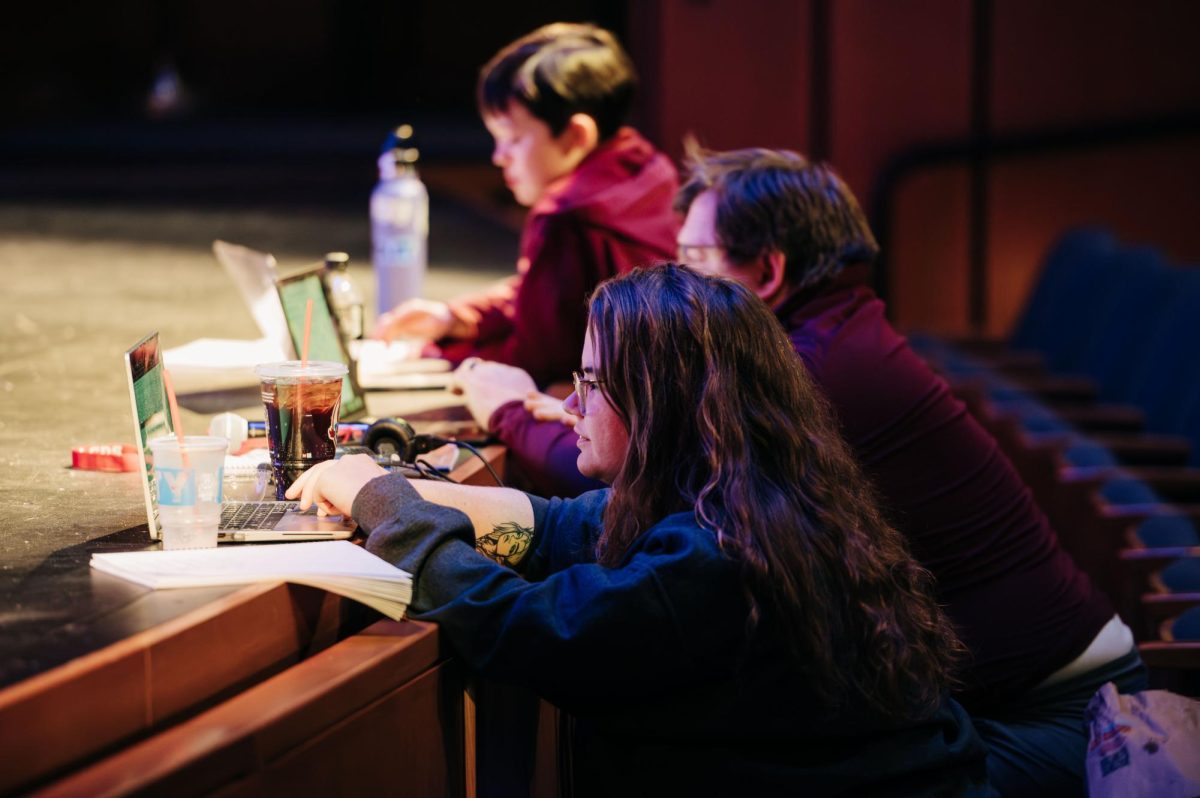
As you sit back in the brisk theater watching the dazzling musical in front of you with flying witches, phony wizards, and magical shoes, it’s easy to forget how many small details go into making such a production possible. In the Lancaster Country Day School’s rendition of “The Wizard of Oz”, it’s important to recognize and understand all the actors, crew, and directors’ hard work.
A large part of the preparation process are rehearsals strictly used to learn and memorize the score. The music preparation was essential, especially for a musical with such iconic songs like “Somewhere over the Rainbow” and “Follow the Yellow Brick Road.”
Gabe S., a freshman at LCDS who played the Cowardly Lion, explains the average music rehearsal process, “Music rehearsals were in Steinman Theater and you would receive the music book and your script. You would have your script for table run throughs, which is just reading through the script with no stops,” he said. “We would also do music run-throughs with our music book, which is where each section of the ensemble learns their individual part and we then build up from there.”
Gabe describes the group learning process, but it was quite different for individual songs. LCDS Musical Director, Mr. Bomberger, would pull actors aside during Tech Week or during the early music rehearsals to privately learn your piece. These solo songs cause a lot of stress for students.
Gabe tells of his most difficult experience as, “The hardest song to learn for me was “King of the Forrest,” mostly because of the big monologue in the middle of the song. It was really difficult to memorize the words for that and get the expressions right. So it took me up to tech week to get that song just right.” Gabe, as much as the audience, was thrilled with his beyond perfect execution of the ballad.
Not only did the cast have to memorize song lyrics, they also had to memorize each note and harmony. Then add tremendous amounts of choreography, acting direction, props, and costumes. Regarding the total timing of just prepping the musical score, Gabe said, “From December to mid-January, we would learn music and then later on add choreography and scene work.”
The amount of time, effort, and grueling hard work that all participating in the musical had to go through does not go unnoticed. When the curtain pulls back and the lights turn on, the cast and crew’s efforts are all worth it.
Another main aspect of “The Wizard of Oz” is the iconic pair of the good and evil witches. To portray their flying magic, our theatre program used a flying rig system that included the use of flying bikes, floating bubbles, hot air balloons, and magic brooms. With such complicated visual effects, it takes countless hours to execute.
Assata F., a junior at LCDS who played the Wicked Witch, describes the process, “The rehearsals were really fun, but they were also really uncomfortable because you would be in a flying harness for like two hours just waiting to fly,” she said. “I did almost fly into a huge set piece though, the huge house. Basically, it was all going fine, till there was a lack of communication between the crew. It was genuinely terrifying and I did not want to fly after that.”
To give a full performance, each actor must master singing, acting, and dancing simultaneously. The dance rehearsal process took constant drilling and hours of memorization just to hit the steps.
When not directly involved with theater, many people find it difficult to understand how much dedication the dancing performance can be. Mrs. Healy, LCDS’s dance and physical education instructor, said “People might not realize how long it takes to teach even just a minute worth of choreography. Having to stay in the studio teaching the steps, and then cleaning by going through each turn and direction. People don’t realize how long it actually takes to get solidified.”
Not only is the choreography hard to learn, it is also incredibly difficult to construct. Mrs. Healy is not only teaching an almost 40 person ensemble, but also creating each individual move and direction. She explains the process as, “At the beginning of the year I kinda started brainstorming ideas but I didn’t piece anything together. So I did the overall picture of what I wanted in the fall to mid winter,” she said. “Once I knew who was in each group and I knew the casting, I started narrowing it down and going little but my little till we got the final look.”
Along with learning choreography, the actors had to learn their blocking. A simple definition of blocking is, all the planned steps, directions, big expressions, and character choices you make during a scene.
Mr. Bomberger is responsible for teaching each slight movement during a scene. As he states about the blocking process, “It’s always a “beast,” especially with our early time slot in the school musical season. For the students, it was intensive—rehearsing Monday through Friday and long Saturdays.”
Along with actors and crew, stage and technical direction is incredibly crucial. The directive process shows how each rendition of “The Wizard of Oz” has a different creative flare managed by different directors ideas.
Mr. Bomberger explains his original take for the show as, “To create a version that felt both nostalgic and fresh.” While his first interpretations of the show exemplified great promise, he further explains that, “While we hit the major thematic notes I envisioned, the students brought an individual energy that shaped the final show into something more vibrant than I could have planned on my own.”
“When you’re in theater and you’re juggling your academics and time, it’s a lot. You’re always tired, as well as emotionally and physically exhausted.” said Assata. “ I feel that theater people don’t get a lot of credit for their work because people don’t see how difficult it actually is.” This was a common theme amongst the LCDS Theater Company.
From the director’s perspective, Mr. Bomberger states, “Many people may not realize the sheer scale of the time commitment. During Tech Week for example, students and staff are often here to start the school day at 7:30 a.m. and remain until 9:30 p.m. to get everything just right. It’s a massive team effort that requires everyone’s full dedication to bring the magic to life.”
The next time you sit back to enjoy a musical production, take a moment to appreciate the incredible work behind it – every rehearsal, every costume piece, every design choice, every note of music, and every detail that comes together to bring the performance to life.