









The Artemis II mission involved new technologies like the SLS (Space Launch System) and the Orion spacecraft, allowing humanity to go further than ever before.
Commander Reid Wiseman, Pilot Victor Glover, and Mission Specialists Christina Koch and Jeremy Hansen, crew of the Artemis II Mission, launched at 6:35 p.m. EST on April 1, 2026.
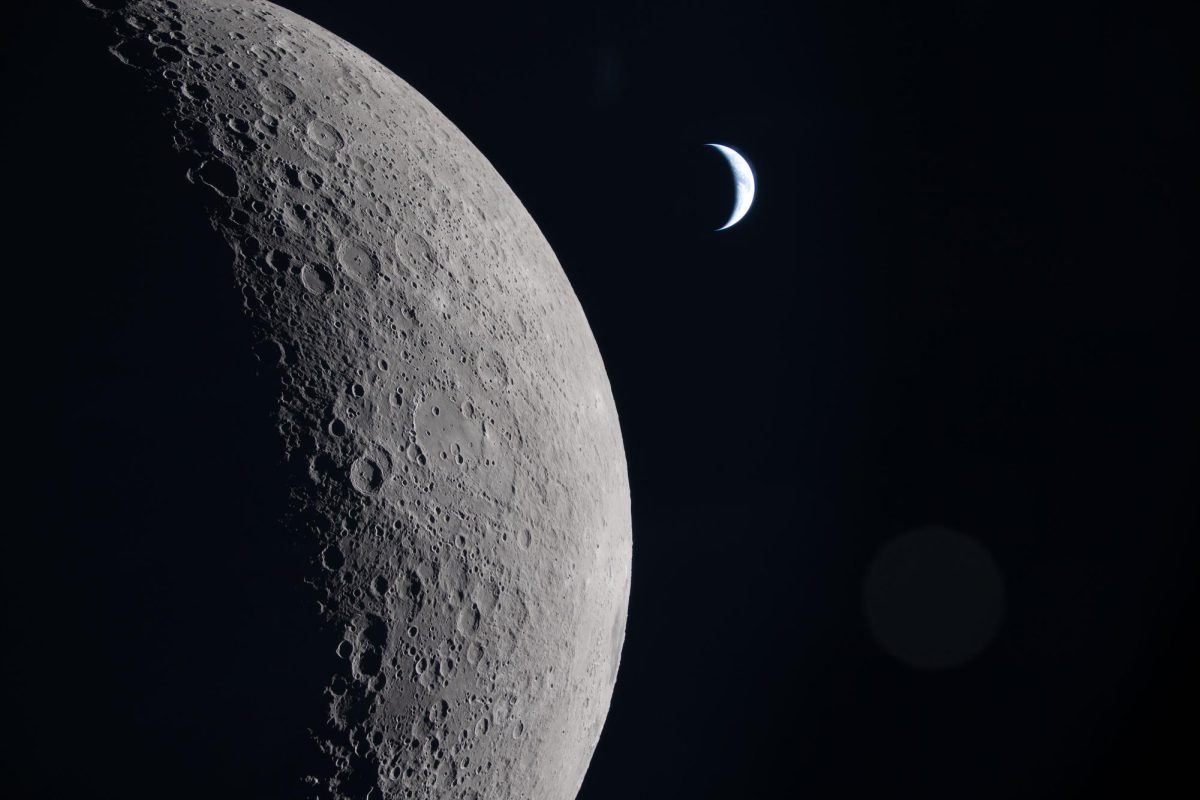
Their 10-day mission included orbiting the Earth before traveling to the moon, circumnavigating it and then returning to Earth. The Artemis II crew splashed down in the Pacific Ocean on April 10. The mission was the first time in 50 years that NASA astronauts left Earth’s orbit.
Orion’s mission was the second phase of the progressively complex Artemis Program. The program will eventually include an International Space Station orbiting the moon called the Lunar Gateway. This gateway will act as a “base camp” for deep space exploration and future travel to Mars.
The Orion Spacecraft consists of three components: the Launch Abort System at the tip of the spacecraft that allows the Crew Module, sandwiched between the Launch Abort System and the Support Module, to return safely to Earth if an emergency has occurred. The crew module is the small, center module that houses the crew.
According to NASA, the Service Module is “created in collaboration with ESA (European Space Agency), the service module provides support to the crew module from launch through separation prior to entry. It provides in-space propulsion for orbital transfer, power and thermal control, attitude control and high altitude ascent aborts. While mated with the crew module, it also provides water and air to support the crew.”
Propelling the Orion Spacecraft into space is the SLS, a super heavy-lift rocket developed for the Artemis Program. The SLS will continue to be refined throughout the Artemis Mission. It was first used in the unmanned Artemis I mission where a tremendous amount of data was collected to use for Artemis II.
According to the Artemis II reference guide, Artemis II was also “a test flight, this time with the addition of four astronauts for a 10-day mission to fly around the Moon and return safely. The mission also includes a test of rendezvous maneuvers between Orion and its expanded SLS in-space stage to assess Orion’s manual handling qualities in preparation for future missions that will require Orion to dock with other spacecraft.”
Junior Nolan T. visited the Kennedy Space Center in Florida to see the launch in person.
“It was something else,” said Nolan. “Obviously you can find videos of different rocket launches online, but nothing beats being there in person.”
Even though Nolan was 7 miles away from the launchpad, he described still feeling the power of the launch.
“You can actually feel the rocket engines,” he said.
Nolan added, “So you couldn’t actually see the rocket from where you were, but after it took off, you’d look for it and you just see this plume of fire and smoke coming out from behind the tree line. It’s our generation’s version of the Apollo program. Seeing people going back to the moon for the first time in 50 years.”