










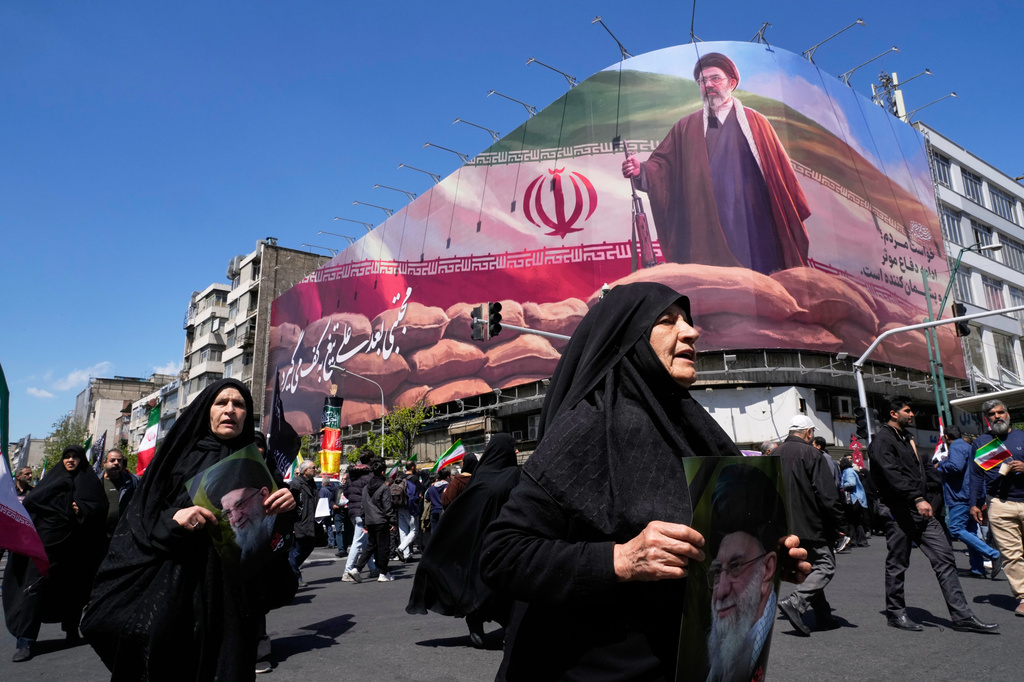
The United States and Israel have launched a sustained aerial campaign targeting Iran’s military and nuclear infrastructure, marking the most significant escalation in the Middle East since the invasion of Iraq over 20 years ago.
U.S. and Israeli forces bombed Tehran, Iran, on Feb. 28, 2026. Iranian Supreme Leader Ayatollah Ali Khamenei and hundreds of Iranian officials perished during the strike. The operation was dubbed “Epic Fury”.
Khamenei’s son, Mojtaba Khamenei, who sustained injuries in the strike, was appointed his successor as Supreme Leader by Tehran’s Assembly of Experts on March 8.
Supreme Leader Mojtaba Khamenei stated via a state news spokesperson that he was keeping a, “file of revenge.” following the assassination of his father and other family members. This is the first time the position of Supreme Leader has transferred from father to son since the establishment of the position after the 1979 Iranian Revolution.
That same day, a US tomahawk missile struck Shajarah Tayyebeh Elementary School, killing at least 175 people, most of which were children, according to the New York Times. An investigation by the military found that Central Command, the US military headquarters for the operation, had used outdated Defense Intelligence Agency information regarding the school being used by the Iranian military.
The next day, Mar. 1, Iran responded by sending missiles and drones toward shopping centers and airports across the Persian Gulf states, halting all flights in the UAE.
Simultaneously, Israel launches a new offensive into southern Lebanon at Prime Minister Netanyahu’s command to create a buffer zone against Hezbollah. In early March, the Iranian-backed Hezbollah attacked northern Israel in retaliation for the death of the Iranian Supreme Leader.
Iranian attacks across a range of countries, from Sudan to Iraq, killed 13 US service members. One such attack downed a refueling plane which crashed in Western Iraq, killing everyone aboard the aircraft.
President Trump demands that America’s NATO allies assist in reopening the Strait of Hormuz, with NATO refusing to engage in the war. NATO members France and the United Kingdom have conceded assistance to limited degrees.
President Macron of France stated, “We are not a party to the conflict, and therefore France will never take part in operations to reopen or liberate the Strait of Hormuz,” France is willing to help secure the Strait of Hormuz, provided it is separate from the ongoing war between the US and Iran.
Similarly, UK Prime Minister Keir Starmer, “later agreed to let the United States use bases in England and on Diego Garcia in the Indian Ocean to strike Iran’s ballistic missiles and their storage sites, but not to hit other targets.”
The Houthis, an Iranian proxy group in northern Yemen, began retaliatory strikes on northern Israel. At the same time, the USS Tripoli with 3,500 sailors and marines arrived in the Middle East, bolstering the total number of U.S service members in the region to 50,000.
According to the New York Times, President Trump negotiated with Iran to allow 20 oil tankers through the Strait of Hormuz, a critical junction where about one-fifth of the world’s oil passes.
Due to fuel shortages, more than 50 countries are implementing various policies to reduce fuel consumption and drive down energy prices for the average consumer.