












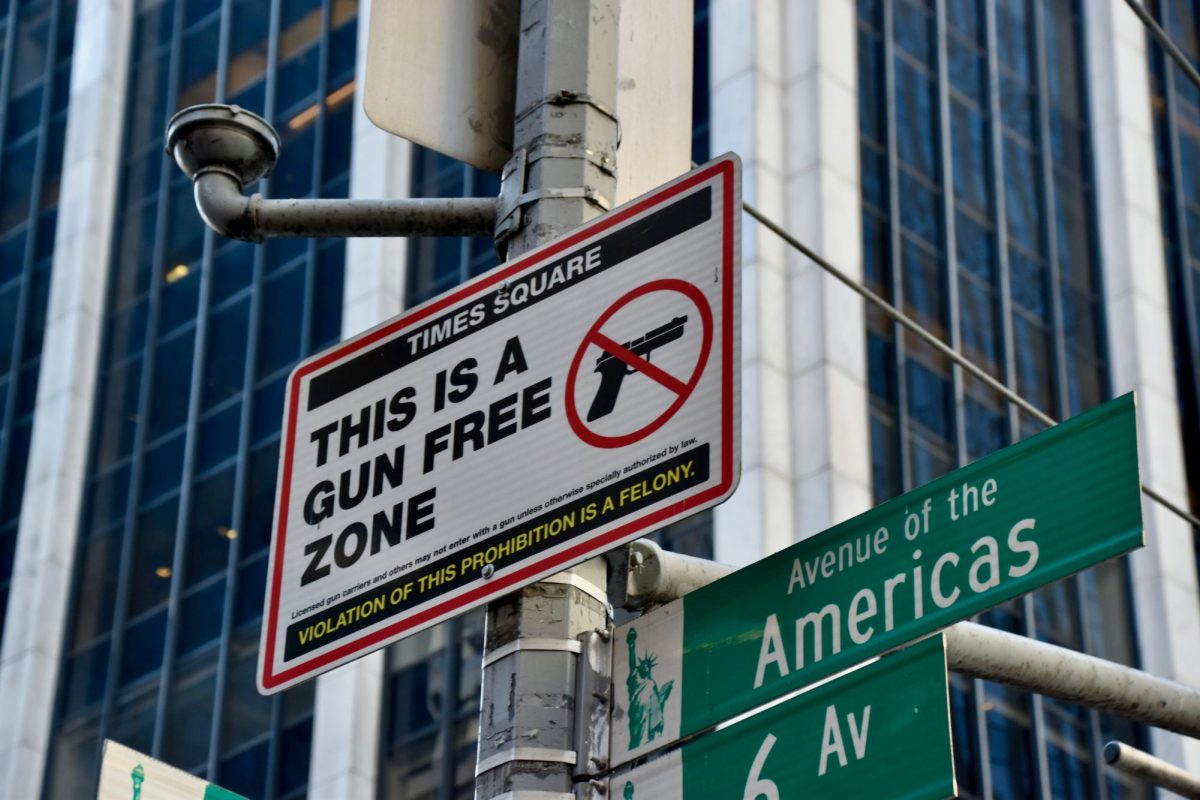
On September 30th, 2025, Pennsylvania House Bill 1593, introduced by State Representative Perry Warren (Bucks County), was passed by the State House of Representatives and is now awaiting consideration in the State Senate. The bill, if passed, would require background checks on purchases involving long guns in Pennsylvania, which consist of handguns with barrels longer than 15 inches, shotguns with barrels longer than 18 inches, rifles with barrels longer than 16 inches, and general firearms with barrels longer than 26 inches. Gun control as a whole has been a major issue of contention throughout the nation, and universal background checks specifically have been at the forefront of that.
The Support
The bill, as mentioned earlier, was introduced by State Representative Perry Warren, of Pennsylvania State House District 31. In a memo published along with the bill, Warren made many statements as to why he wants this bill passed.
“Each year, approximately 1,600 Pennsylvanians die from gun violence,” Warren said. “Long guns account for 4% of gun violence, such as the mass shooting in Uvalde, Texas.”
Warren aims to reduce the amount of deaths stemming from long guns by expanding background checks to long guns, so that people who would otherwise commit a crime with a long gun would be denied the ability to purchase one.
“My legislation would require background checks for all guns, regardless of the length of the barrel,” Warren said, “so that we may prevent gun violence.”
Warren’s stance is one echoed by many gun control actvists nationally. Prominent gun control activist David Hogg has also advocated for universal background checks.
“If you’re afraid of a background check, you shouldn’t own a gun,” Hogg said in social post on X.
Universal background checks to prevent mentally ill people from purchasing firearms are relatively popular among the public, with a vast majority supporting them.
They work by mandating that private individuals, whenever they transfer a firearm to another individual, run a background check through the FBI’s National Instant Criminal Background Check System on said individual, including if said individual is a close friend or family member – although some states have exemptions for family members and gifts.
If a potential issue is identified, the purchase is prohibited for anywhere from three to ten business days, depending on the state, while the respective state governments decide if they wish to prosecute and deny the purchase or not.
“Majorities of U.S. adults in both partisan coalitions Support levels for different firearm policies by political affiliation somewhat or strongly favor two policies that would restrict gun access: preventing those with mental illnesses from purchasing guns (88% of Republicans and 89% of Democrats support this) and increasing the minimum age for buying guns to 21 years old (69% of Republicans, 90% of Democrats),” according to a report done by Pew Research.
The Opposition
Background checks, as well as gun controls, are controversial among many gun rights activists. The main opposition to gun control stems from the Second Amendment of the United States Constitution. The Amendment states:
“A well-regulated militia, being necessary to the security of a free State, the right of the people to keep and bear arms, shall not be infringed.”
The argument among gun rights activists is that any infringement on the right to bear arms is unconstitutional. This is mainly supported by the Supreme Court’s decision in 2008’s District of Columbia vs. Heller, in which the Court ruled that a District of Columbia gun control law was unpermitted by the Constitution.
Gun Owners of America, one of the largest firearm advocacy groups in the nation, said in an article on their website, “So truly, the Heller decision was a seismic shift in the legal world regarding our gun rights. It is hard to overstate the benefits of this Supreme Court decision. After all, the Heller case is the reason that many cities later repealed their gun bans. It provided the reasoning – that judges like Brett Kavanaugh (as a judge on the DC Circuit court) – used for arguing that bans on so-called “assault weapons” are unconstitutional. It opened the floodgates for the advancement of Constitutional Carry legislation. And last but not least, Heller provided the legal basis for the second landmark gun case two years later.”
More specifically to background checks, many activists oppose them by claiming that background checks target law-abiding citizens at an unusually high rate. They cite federal data as well as data about why the federal Bureau of Alcohol, Tobacco, Firearms, and Explosives does not continue to deny certain applicants who were denied at first.
“In the federal background check system for gun purchases, only about one out of every 3,000 denials actually leads to a conviction,” crime expert John Lott said to the National Review. “That’s because the vast majority of prohibited purchases were the result of mistaken identification. The government confused the identities of law-abiding citizens with those who were prohibited.”
Gun rights activists also claim that states that pass these measures unfairly target prospective buyers of lower-income households.
“Background checks involve fees that drive up the price of guns in private sales and make it harder for poor people to defend themselves,” Lott said to the New York Times. “In New York and Washington, those fees cost at least $125 for private gun sales.”
Moreover, gun rights activists claim, that stopping people from obtaining firearms makes them less safe – many cite the 2021 National Firearms Survey conducted by Georgetown professor William English, the most recent survey related to self-defensive firearm usages, as evidence.
“The survey further finds that approximately a third of gun owners (31.1%) have used a firearm to defend themselves or their property, often on more than one occasion, and it estimates that guns are used defensively by firearms owners in approximately 1.67 million incidents per year,” Georgetown University assistant professor William English said in the study.
More specifically to long guns, English said, “Handguns are the most common firearm employed for self-defense (used in 65.9% of defensive incidents),” meaning long guns were employed in 34.1% of cases – or 545,600. By comparison, the amount of gun-related deaths – according to the CDC – totaled almost 47,000 in 2023.