



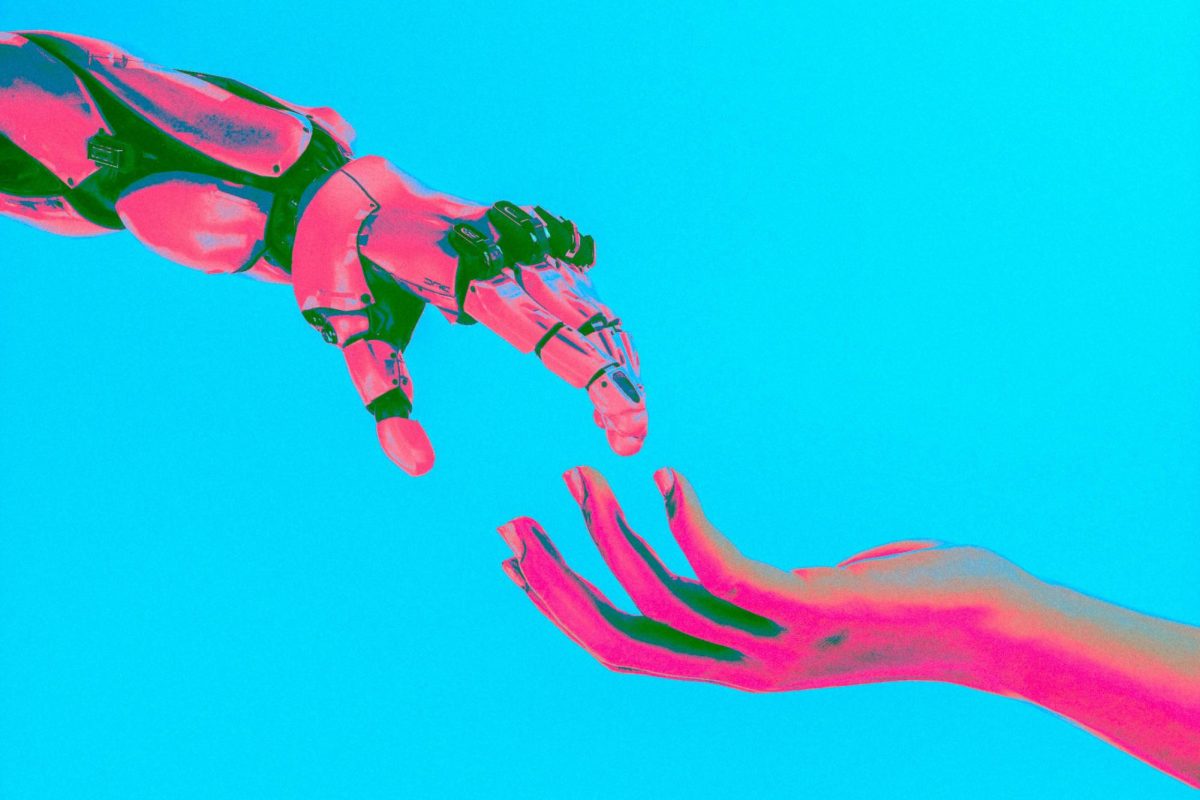
AI can be a helpful tool for students and teachers alike, according to the Harvard Graduate School of Education.
In a study, Harvard surveyed teens and students and many admitted to using AI to help them with homework. A lot of teens didn’t use it to outright cheat or abuse it for an academic advantage. Instead, many students used AI to help them with questions they were struggling on or completely stumped on.
According to Harvard, “The most commonly reported use for AI was getting information (53%) and brainstorming (51%),” and only 4% of students claimed to be daily users.
Many students expressed their own concerns about AI in school settings, such as it being used to create a harsh learning environment or used to bully others. Harvard concluded that AI can be both negative or positive, depending on who’s using it and how.
According to the National Library of Medicine, students reported that AI – and ChatGPT specifically – had helped them adopt a more positive outlook, emotional impact and response. The use of AI also led to instances of less stress and more stable wellbeing, more structured communication, improved efficiency and coordination, and brainstorming of ideas.
There were some drawbacks, however, as they reported that students who use AI daily or almost everyday showed less social interaction, more isolation, less emotional intelligence, anxiety, and more mental health issues.
The Illinois College of Education found that AI helps students with learning and tutoring, provides feedback, can be used to create content such as prep questions, study guides, more inclusive content, more wide spanned database and list of sources, makes abstract or complex concepts more relevant and easier to understand, and fosters critical thinking. They also listed AI’s downsides, such as privacy concerns, potential bias towards algorithms, less human interaction, high costs, academic misconduct such as cheating, and being inaccurate.
In previous years, Dr. Juliette Winterer, an LCDS science teacher, said she would not be using AI. However, this year, she has chosen to incorporate AI in her AP Biology class.
“I’m planning on incorporating it as a graded element of this year’s Biology final project,” Dr. Winterer said. “I will restrict the actual writing to class time to discourage inappropriate use of AI. I want teachers and students to leverage its strengths but I also want to preserve the academic integrity of the learning environment.”