



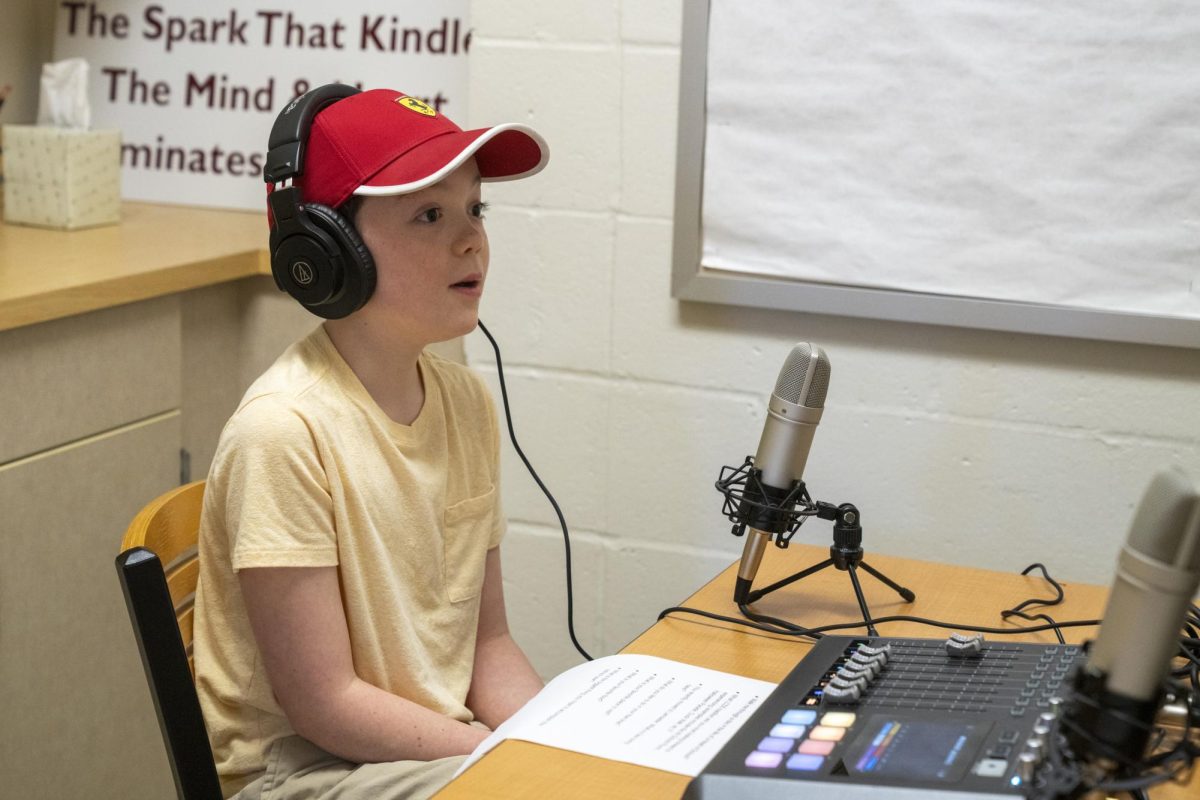



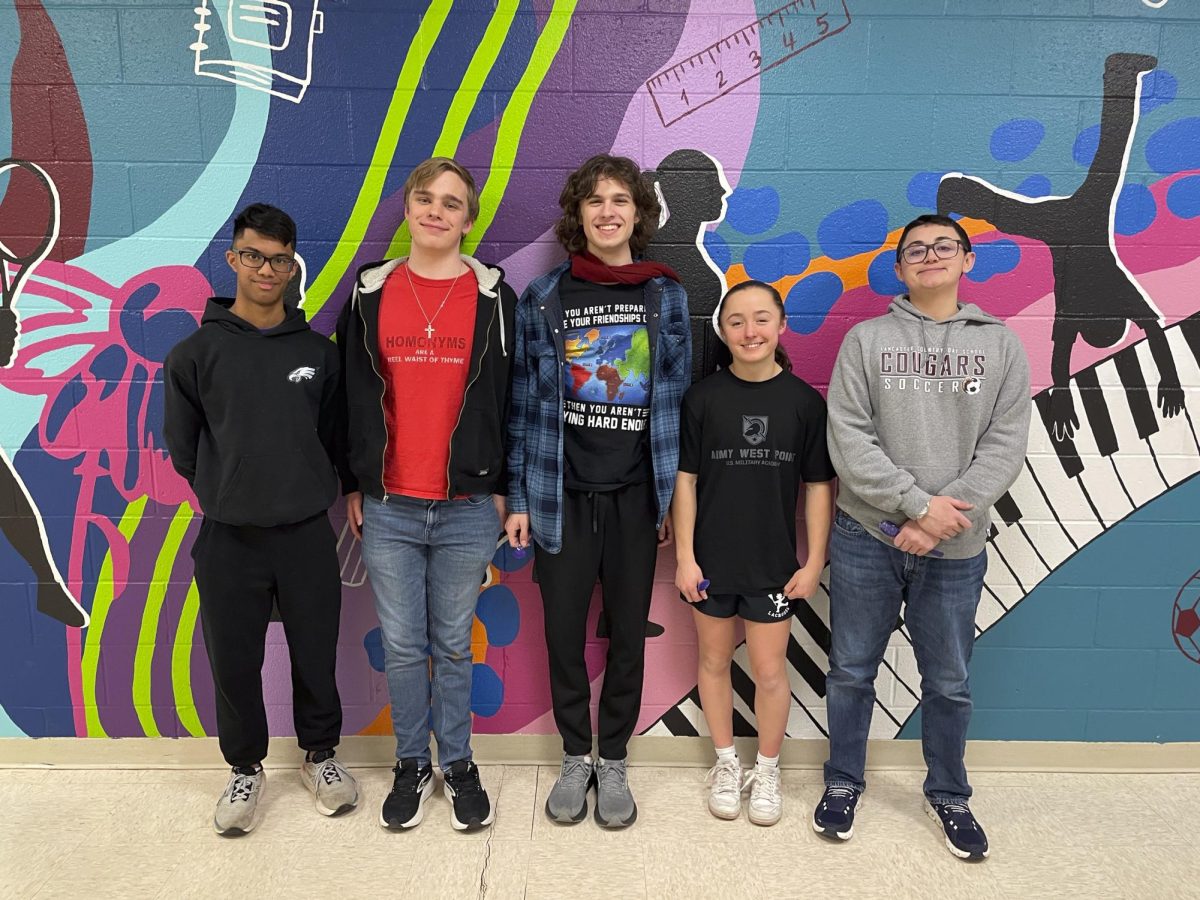
Religion is a major part of some people’s lives. Once a cycle, student members of the Living in Faith Everyday (L.I.F.E.) Club gather at lunch to discuss their faith in an open, likeminded setting. The Fourth Estate sat down with junior Michael C., the club’s president, and junior Dalton G., club member, to gain insights on how their faiths intersect with everyday school life.
“[L.I.F.E Club] is for people of faith to gather to have a community and that’s really important because there aren’t a lot of us at this school who are heavily religious,” Michael said.
This reflects a broader national trend. The Public Religion Research Institute found that “[f]ewer than half of Gen Zers and millennials say that religion is important in their life, compared with the majority of Gen Xers (55%) and baby boomers (62%) and two-thirds of the Silent Generation (67%).”
“My day to day school life is influenced by Christ, by keeping me focused on my education, how I can become better academically, how I can fortify my mind, and also [keeping] me focused on God,” Dalton said.
“I also understand that if I don’t do good on something academically, it doesn’t matter because God has a greater plan for me,” he said. “Sometimes my academics don’t get where I want them to even if I try; [that] doesn’t necessarily mean I’m not good at it, [it] just means they weren’t in the works
Dalton also discussed how he uses his religion to find further meanings in class material not necessarily covered by the curriculum
“There will be classes where they will teach you the academics behind [the Bible] instead of the faith behind it,” he said. “There are many points where the faith behind something, even if it’s not necessarily pronounced, there is still a lot of it that is necessary to understand the true meaning of it.”
In classes like the humanities, specifically American Studies and both World Civilizations, sensitive topics can be the subjects of conversation. Many students often utilize their personal lived experiences in these conversations, such as in discussions related to religion in academic courses.
“It informs a lot of the way I will approach things in American Studies,” Michael said. “…I may approach a debate about the Constitution thinking about how we as human beings are fallible and prone to falling back on our worst animal natures. So I tend to say in a debate on, for example, the Constitution, I’ll say all systems will decay over time, because we’re human and we’re inclined to do bad things… it’s not that you can’t argue about these things, it’s just that you can’t only argue about these surface level things. You have to go deeper and ask questions like ‘is humanity inherently good or bad or somewhere in-between?’ And that somewhere in-between is where I fall.”
Many L.I.F.E. Club meetings focus on conversations like these. For example, Dalton said he uses his faith to guide his understanding during class discussions. “I will use God to help me understand what I am talking about,” he said.
“All of the people in L.I.F.E. Club, we’re all very open to questions and anything else if anyone is curious,” Michael said. “We’d like to talk about these things.”