











Artificial intelligence is no longer a futuristic idea.
In the workplace, especially, AI is already changing how people work and what jobs are in demand. Research from the Society for Human Resource Management indicates that about 23.2 million U.S. jobs have a minimum 50-percent of their tasks automatable by AI. As AI grows more powerful every day, more jobs are at risk of being replaced.
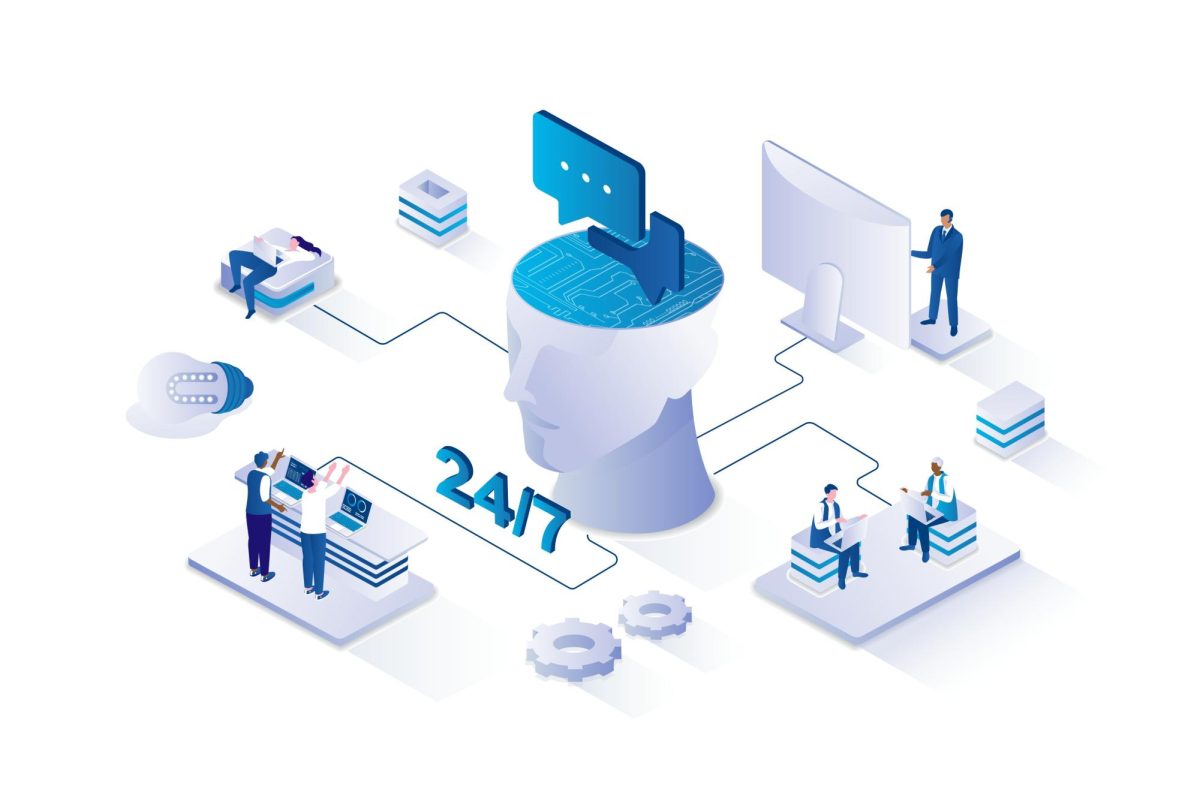
One job that has been largely transformed by AI is customer service. Many companies now use AI chat bots and automated phone systems to answer customer questions and solve problems without human operators. Large technology companies like Salesforce have cut thousands of support jobs after implementing AI systems. For example, CVS uses AI chatbots for their Customer Service line, meaning basic questions are often handled by an automated voice.
Those AI chatbots answer basic customer service questions around the clock, reducing the need for large human teams.
Another example of job market changes is retail cashiers and servers. Self-checkout machines and AI-powered pay systems are replacing many cashier roles in stores and fast food restaurants. In some establishments, customers now rely on digital ordering screens that reduce direct interaction with servers.
As our world becomes more dependent on AI, many entering the job market wonder which careers could be impacted next. Because of these rapid changes, high school and college students are much more conscious of their standing in the job market, either in the future or present day.
Many LCDS Seniors are considering how they can best prepare for an AI-driven world.
Senior Kane K. recalled an interaction he had while trading in his iPhone at a T-Mobile store. When he walked in, he said, he noticed that there was only one employee working. During their conversation, the employee predicted that his job could soon be replaced and that T-Mobile stores may eventually rely solely on AI-operated systems.
“Hearing that from an actual worker is kind of scary,” Kane said. “It almost re-centers us because it reminds us that we are headed to a more dystopian future that we thought was further ahead.”
The shift toward automation is not limited to customer service or face-to-face interaction. Many careers in creative fields, including art and media, are also beginning to feel the impact of AI.
“I feel that with art or anything to do with movie scripts, you could easily just type into ChatGPT ‘Write me a scene about this or that’ and it can make it for you,” Senior Gavin G. said.
The ease AI brings to certain creative tasks can reduce the demand for human input. For many, that shift creates anxiety about job security and the possibility of sudden unemployment.
Another concern AI brings up is how qualified a person is at their job. Many careers require specialized skills developed through higher education or years of hands-on experience. The idea that people used AI to receive their degrees, like having AI write their essays or do their homework, makes us wonder how they will perform at their specialized task.
These concerns are echoed in broader conversations about AI in higher education. The Marketing AI Institute reports widespread AI use among college students across institutions. In one example, a Columbia University graduate admitted to using AI for nearly 80-percent of his coursework.
“It makes me scared for future doctors and people who are majoring in knowledge like that,” said Senior Karolina S. “It will be so frightening because they are going to be using AI for their degree.”
Senior Gabbie R. shared a similar concern: “People don’t think as much any more or use their critical thinking skills. They just let it up to AI.”
Looking ahead, AI is unlikely to eliminate all jobs, but some jobs will change.
A report by Forbes, citing data from PwC, McKinsey, and the World Economic Forum, estimates that up to 60-percent of current jobs will require changes due to AI. Workers who adapt by learning new skills will likely have an advantage in the future job market.
As AI continues to develop over time, understanding its impact on employment will be essential for students preparing for their careers.